Webb Telescope Detects Potential Biosignature Markers on Exoplanet
Spectroscopic analysis of a distant super-Earth reveals atmospheric components that could support life, though scientists urge caution.
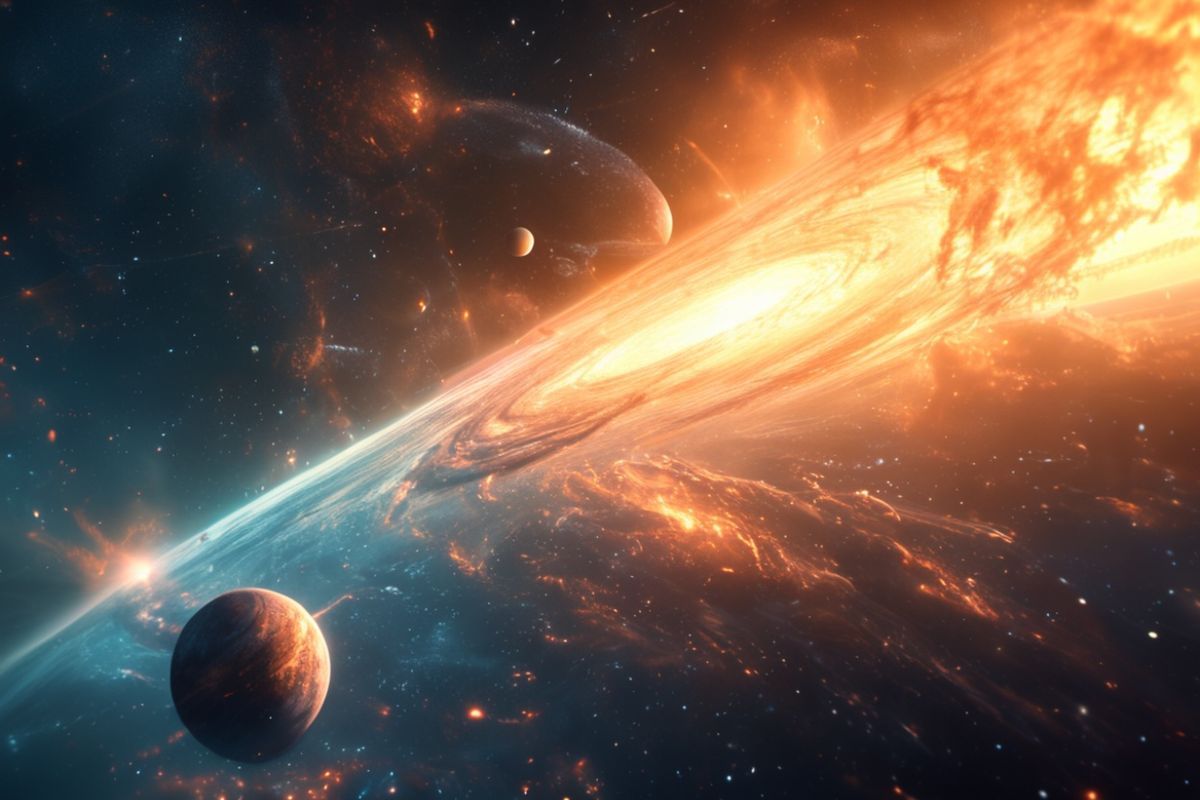
The James Webb Space Telescope (JWST) has returned spectral data from exoplanet K2-18b (often dubbed a 'Hycean' world) that reveals the presence of carbon-bearing molecules, including methane and carbon dioxide. Most intriguingly, the data hints at the possible presence of dimethyl sulfide (DMS), a molecule that, on Earth, is only produced by life.
"We are looking at the atmospheric fingerprint of a world 120 light-years away," says astrophysicist Dr. Sara Seager. "Seeing methane and CO2 confirms it has a carbon-rich atmosphere, likely overlying a water ocean. The potential DMS detection is thrilling, but we need much more data to rule out non-biological geological processes."
The Search Continues
This finding does not confirm aliens, but it proves the JWST's capability to detect subtle chemical signatures on distant worlds. It narrows the search field, allowing astronomers to focus their telescope time on the most promising candidates for habitability.
Related Posts

Breakthrough in Quantum Computing Revolutionizes Data Security
Scientists achieve major milestone, enabling powerful new encryption methods.

Cross-Platform Frameworks Streamline Mobile App Development
New open-source tools allow developers to write code once and deploy everywhere, significantly reducing development time and costs.

Spatial Computing: The Next Interface Beyond the Smartphone
Tech giants are betting big on mixed reality headsets, envisioning a future where digital information overlays the physical world.