Paleontology's Golden Age: Giant Titanosaur Findings Redefine the Cretaceous
Recent excavations in Patagonia continue to unearth massive sauropod fossils, offering new clues into how these biological giants defied gravity.
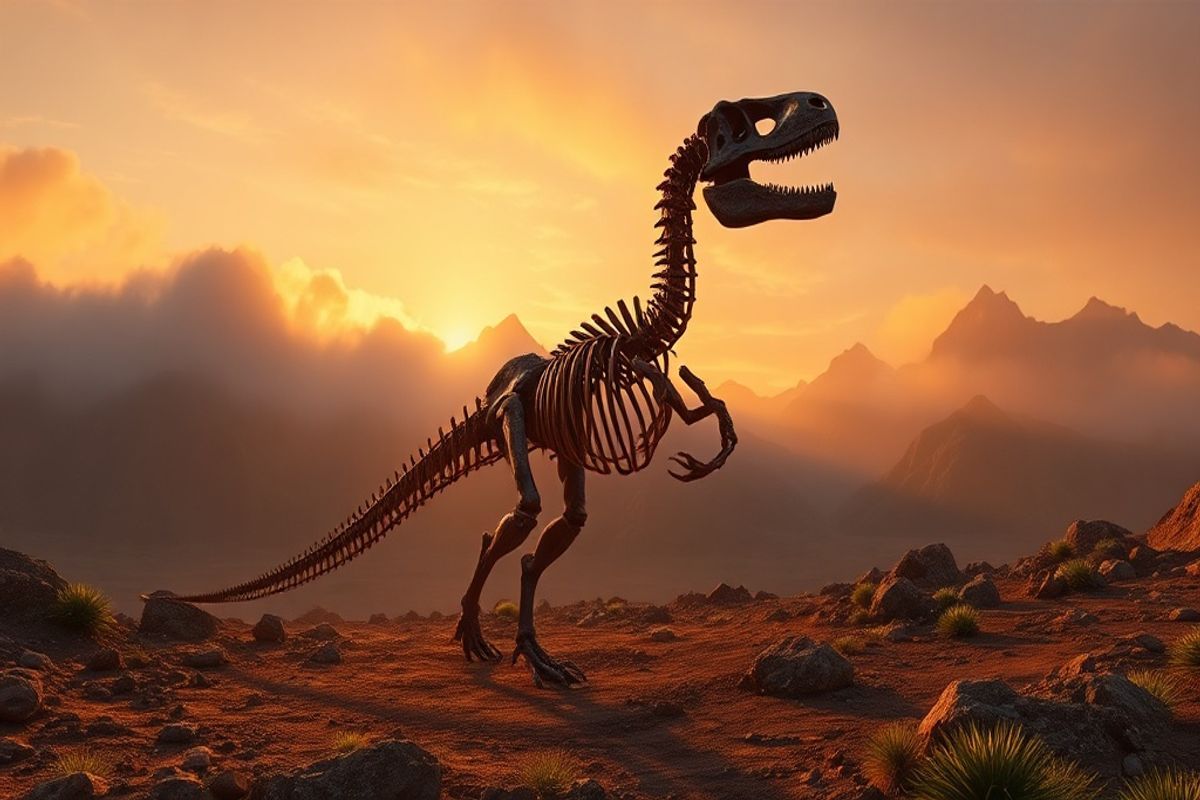
Argentina's Patagonia region remains the epicenter of dinosaur discovery. Paleontologists have unveiled clearer data on the Patagotitan mayorum, one of the largest land animals to ever walk the Earth. The latest analysis of fossilized limb bones suggests these titans grew faster than previously thought, reaching their massive size during short growth spurts.
"We are looking at biology pushed to its absolute limit," says paleontologist Dr. Maria Rodriguez. "The biomechanics required to support 70 tons on land are mind-boggling. These new finds help us understand not just their size, but their metabolism and how they interacted with the ancient flora of the Cretaceous period."
The Mesozoic Ecosystem
The find is also shedding light on the ecosystem that supported such behemoths. Fossilized plant matter found nearby indicates a lush, flowering landscape that provided the sheer caloric density needed to sustain herds of these massive herbivores.
Related Posts

Paradigm Shift: Researchers Rewrite Matter's Rulebook
Physicists stunned as groundbreaking experiment defies centuries-old theory.
Neuroscience Breakthrough: Mapping the Pathways of Episodic Memory
Researchers identify specific neural circuits responsible for consolidating memories, offering new targets for treating cognitive decline.

Mysterious Signals from the Cosmos: Astronomers Stumped by Repeating Radio Blips
A team of astronomers has detected a series of unexplained, repeating radio signals originating from a distant galaxy, leaving scientists baffled.