Climate Models Update: Accelerated Ice Loss in Polar Regions
New satellite data refines climate models, indicating that polar ice sheets are reacting to warming temperatures faster than previously predicted.
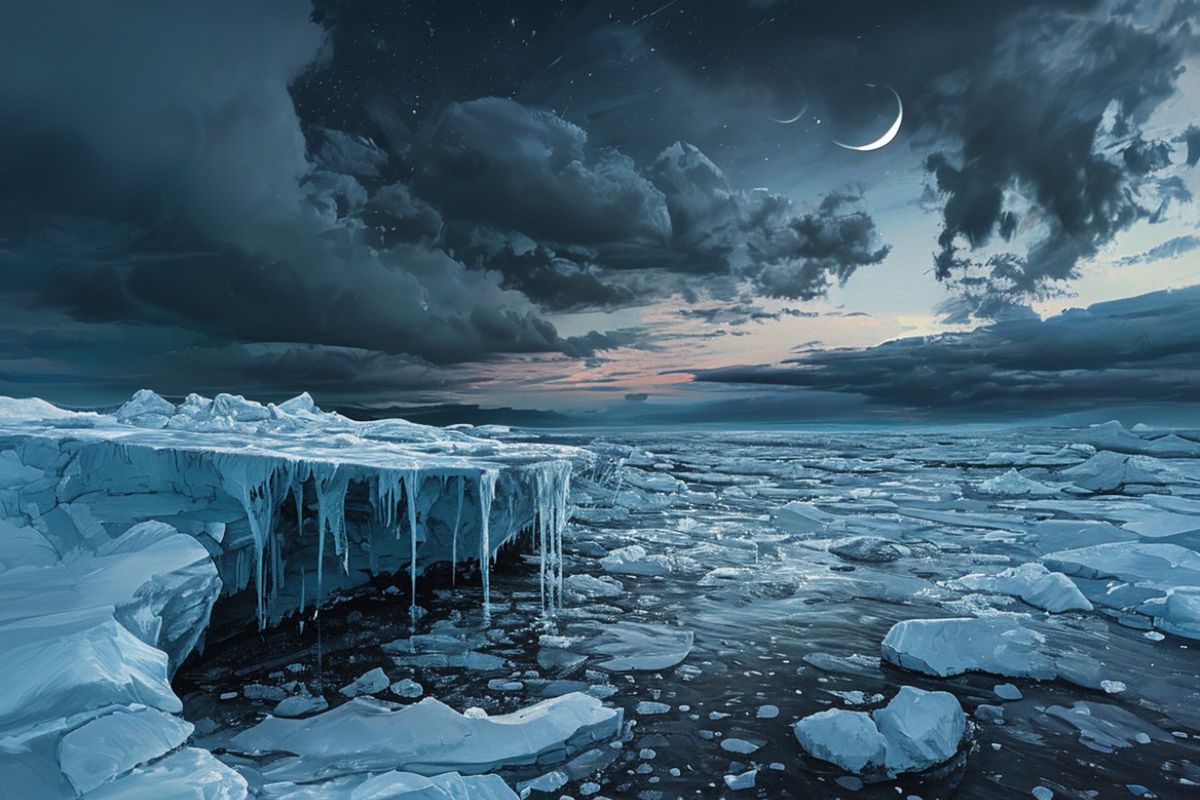
Recent studies utilizing advanced satellite altimetry have provided a clearer, albeit more concerning, picture of polar ice stability. Researchers monitoring the Thwaites Glacier in Antarctica have observed accelerated retreat lines, suggesting that the interaction between warming ocean currents and the ice shelf is more dynamic than earlier models accounted for.
"We are seeing non-linear responses to warming," states Dr. Jane Smith, a glaciologist. "It's not just about air temperature; it's about warm water undercutting the ice shelves, reducing the friction that holds the glaciers back. This data is crucial for refining our sea-level rise projections for the coming century."
Global Consequences
The updated models emphasize the need for adaptation strategies in coastal communities. Urban planners and engineers are using this data to reassess flood zones and infrastructure resilience, moving the conversation from mitigation to necessary adaptation.
Related Posts

Paradigm Shift: Researchers Rewrite Matter's Rulebook
Physicists stunned as groundbreaking experiment defies centuries-old theory.
Neuroscience Breakthrough: Mapping the Pathways of Episodic Memory
Researchers identify specific neural circuits responsible for consolidating memories, offering new targets for treating cognitive decline.

Mysterious Signals from the Cosmos: Astronomers Stumped by Repeating Radio Blips
A team of astronomers has detected a series of unexplained, repeating radio signals originating from a distant galaxy, leaving scientists baffled.